Tuesday, March 20, 2012

“Almost Famous” (Directed by Cameron Crowe, 2000)


The uncoolest of us rock fans can only imagine what life would be like on the road with our idols. Cameron Crowe’s “Almost Famous” gives a semi-autobiographical snapshot of this fantasy, taking us on the tour bus in a 1970s rock ‘n’ roll adventure. An entertaining and seemingly honest cinematic depiction of rock culture, “Almost Famous” is a born crowd-pleaser complete with Crowe’s amusing-yet-believable script and performances from a sublime cast.

The film is lead by protagonist 15-year old William Miller as he stumbles into the chance of a lifetime: to spend a few weeks on the road with his favorite band, Stillwater, and write an article about them for “Rolling Stone” magazine. Throughout his struggles, William gets tossed in a love triangle, finds support from famous “Creem” rock critic Lester Bangs, and gets caught up in where his true allegiance lies: to his new famous friends or his journalism career.

The script is dripping with cornily charming quips that have undoubtedly been quoted in many obnoxiously pretentious Facebook statuses. However, Crowe still manages to make the poetic lines collectively feel real. Most resonating (though dangerously close to becoming cheesy) was the fictionalized version of critic Lester Bangs’ phone conversation with William about staying true to your dorky self in the life of rock criticism: “The only true currency in this bankrupt world is what we share with someone else when we're uncool.”

Even more memorable from “Almost Famous,” however, were the movie’s remarkable characters. Though all actors were impeccably casted, two transcended above the rest. Kate Hudson gives what is arguably the most charismatic and emotional performance of her acting career as band-follower Penny Lane, the girl at the center of the movie's love triangle. Frances McDormand (“Fargo”) also brilliantly portrays William's mother—she perfectly illustrates a mother struggling to find the balance between smothering her children and giving them their freedom.

The film pays lip service to a few music-related issues: the struggle between commercial acceptance and remaining true to one's art, and the difficulties faced by band members who constantly wane in and out of friction with each other. Being a daughter of a bigwig in the music business who has spent most of his adult life on tour with famous rockstars, I have experienced first-hand the truly confusing mess the industry can create of a person. Upon entering the music business, a forth wall starts to dissolve that used to block the mysticism of the rockstar lifestyle. They are now coworkers in a sense, and along with them, everyone wants to be your friend. But eventually, the truth of the business is uncovered—it is a world full of jealousy, deceit, reputations, wealth and most importantly, fame, so much so that in order to succeed there is pressure to follow suit in the corrupt pathway. Crowe definitely brings this ugliness of the industry out—perhaps not enough—exposing the back-and-forths in William's mind as he begins to wake up to his heroes' humanity and realize their blemishes.

Though constantly entertaining, “Almost Famous" begins to lose momentum towards the close of the film. The end is dragged out far too long, leaving the audience wondering which tearful embrace will be the last. Also, the script unsurprisingly starts to lose authenticity in its Hallmark-card sendoffs.

But this being said, the movie as a whole stands as an excellent film on all accounts. From the deliciously sentimental script, wonderfully talented actors, and exceedingly truthful depiction of the music business and rock criticism, “Almost Famous” is a movie that—though including the necessary elements of sex, drugs and rock 'n' roll—you’d happily watch with mom.

Tuesday, March 6, 2012

Lady Gaga, "Born This Way" (Interscope, 2011)


Lady Gaga has no fears. Headstrong in creating her first album boasting about her nonexistent fame and popularity, her predictions eventually proved true by creating a massive fanbase by which she addresses as her “little monsters.”

Her equality-seeking music has become a frontier in gay rights, though she speaks out against everything from racial discrimination to high school bullying. Gaga even delivered an incredibly moving and unforgettable “Don’t Ask Don’t Tell” rally speech as she screamed her analogy that, “Equality is the prime rib of America,” referencing a dress she wore to the MTV Video Music Awards that was made out of cuts of steak.

Someone so deeply philosophical, revolutionary and innovative paired with a remarkable musical talent has the tools to create extraordinary music to shake our shallow and auto-tuned society, but on her sophomore album “Born This Way,” Lady Gaga creates a disappointingly hokey album that feels rushed and borderline parodied.

Undeveloped lyrics, such as in “Bad Kids” “I’m a twit…and I’m proud of it,” make the album feel tossed together with an awkward mess of a thousand ways to say ‘it’s cool to be weird,’—not to mention the multitude of languages forcibly sprinkled throughout. The words, “Don’t be a drag, just be a queen” on the title track compellingly paired with a Madonna-like melody creates an phony stereotypical match to a 1980’s pop record because all gays are into drag queens and, like, love Madonna. And sparkles.

There is no excuse for this, Gaga! You are capable of much better (see EP “The Fame Monster.”) It doesn’t matter that you tweeted the deeper inspirations behind each of your songs as clarification—were we supposed to assume this record is about striving to succeed though tough times in New York, or the inspiration taken from your Grandpa? Because the drinking-lots-of-beer and “I want your whiskey mouth all over my blonde south” lyrics were as convincingly deep as your hair is naturally blonde.

Sonically the album sounds just as reckless; with crushing disco beats, over-the-top guitar solos and an attempt to include Dubstep undertones everywhere creates a mess of grade-school basement DJ trials combined with a preachy Whitney Houston record. A classic flaw in this album, as seen in many of such talented female piano-playing vocalists, was that it was well over-produced; the true-core talent Gaga has underneath the synthesizers is best showcased when paired with just a piano.

But the closest we’ll get to this unpretentious Gaga is on the album’s best song, “Yoü and I.” With a somewhat-dorky country flare, this song is the only break from the thick basslines and is perfect for a car-stereo indulgent sing-along.

Also, if extracted from the context of its fuzzed counterparts, “Government Hooker” stands as the other one of the album’s guilty pleasures. This track, about Gaga’s pretend affairs with JFK, displays catchy hooks and funky post-disco and Casio-tone samples that make the track feel actually paid-attention-to.

Collectively, the dorky lyrics and awkward backings topped with the worst possible album cover, that alone looks like a joke, is apt to leave devoted fans feeling jipped and newcomers uninterested. If Gaga had spent as much creative energy and time pushing musical boundaries as she has social ones, “Born This Way” would have been much more successful.


Tuesday, February 28, 2012

Tame Impala, "Innerspeaker" (Modular Recordings, 2010)


When an album is classified as “psychedelia-rock,” it’s pretty clear of what it entails: some sort of brain-melting guitar and echoed undertone patterns combined to make a lengthy drug-infused jam session. The only question: is it a good trip, or bad trip?

That being said, Tame Impala’s hypnotizing whirlwind of hazy reverb and fuzzy guitar riffs on “Innerspeaker” is not short of blissfully nostalgic; as it kicks on an old paisley-pop record while tweaking in a 21st century vibrancy, the result is ideally executed, constantly dazzling and an undeniably groovy jaunt to wonderland.

As a checkpoint in music history, the late years of the 1960s are known as the time when albums were intentionally created as a whole, from start to finish, as an art form. This creates a deeper 60s similarity to the record beyond just its sound—“Innerspeaker” is an album’s album. Its trance-inducing grooves don’t allow you to hit the next button until it fades out as you dry the drool off your lip.

Aesthetically, the album could fool baby boomers into coming across it as an undiscovered gem (not to mention the ironically striking similarity between lead singer Kevin Parker’s vocals to John Lennon’s). But Tame Impala is establishing a whole new breed of retro-rock: it doesn’t feel as though the Aussie group is completely reconstructing a vintage uniform record or wanting it to be cloaked as a Jimi Hendrix Experience deep cut. “Innerspeaker” has an updated freshness and melody that pushes it from being a 60s-homage to its own unique art. Its balance between a connected classic and a lively pop-rock record will please a larger audience than just psych fans (though they will undoubtedly dig it too.)

After some intentional stereo feedback, the album begins with a delayed and reverbed guitar beat, immediately pulling you into a daze. Once you’re in his grasp, singer Parker croons, "She doesn't like the life that I lead/ Doesn't like sand stuck on her feet/ Or sitting around smoking weed,” as he echoes out in the blurry mixture of sounds. Though the production of the songs is practically more vital than the hardly discernable lyrics, the album tosses around themes like the Ego, existence, perception, and the inner-self. Most notably, the record "Desire Be Desire Go" has a far-out philosophic chorus repeating the question, "Every day, back and forth, what’s it for?"

The album’s sound creeps into your ears, melts through to your brain, and clouds your vision. Proved true by the helicopter of kaleidoscopic stereo-panning on "Why Won't You Make Up Your Mind?" or the heart-beating stomp on "Bold Arrow of Time," “Innerspeaker” demonstrates a encompassing sense of control.

The classic flaw of anything so dangerously psychedelic is that it stares at the carpet too long, forgets what day it is and drifts off into boredom. “Jeremy’s Storm,” the album’s unnecessary all instrumental piece with little to no direction, is most guilty. But forgive it for its long-lasting fluidity: “Innerspeaker” is a trip meant not to be listened to, but experienced.


Tuesday, February 21, 2012

"Cashback" (Directed by Sean Ellis, 2006)


“It takes approximately 500 pounds to crush a human skull. But the human emotion is a much more delicate thing.” Sean Ellis’s “Cashback” perplexingly begins with our protagonist reciting this quote over a classical operatic medley that plays while his (now) ex-girlfriend mutedly screams at the top of her lungs in slow motion. From here, we as an audience have an insight of how unconventional this film will ensue.

After this painful breakup, the central character Ben Willis develops ongoing insomnia. To kill the endless time he now has, he starts working the late night shift at the local supermarket, where his artistic mind hallucinates between dreams and reality.
 
Though the dry, quirky-yet-lovable humor seems a tad “been there done that” after the recent “indie” film craze, the UK feature “Cashback” provides a beautifully atypical twist on a standard love story with its eccentric editing, erotic provocations, and unusual casting.

Both Ben’s sleep-deprived fantasies and his minimum wage job are not short of accurately relatable, making this movie doubly entertaining to watch. But the real kicker is Ellis’ direction in the film: transitioning to and from flashbacks by a swift camera pan as if Ben’s past memories were in the adjoining room, as well as the exquisitely convincingness of his alternate realities. Though this, again, seems redundant of a standard Hollywood feature trying too hard to be bizarrely hip, “Cashback” is successful in marrying an indie film with a sci-fi additive because of its systematic precision and unique editing.

What made this movie perhaps indigestible to some was its heavy influence in classic art; as our Ben is completing his last year in an arts college and the movie reflects his passion for the female composure, audiences may be uncomfortable with the insane amounts of seemingly awkward and frank nudity. We see this especially when his time stopping imaginations lead him to undress every woman in his supermarket--not to mistreat them, but to passionately sketch them. The candidness is done in a tasteful manner and adds a flare to a movie that has some repeated themes.

Ben's recapturing and smooth British accent voiceover strings together nearly every minute of "Cashback" yet never overpowers the camera shots from telling the story. Sean Biggerstaff gives a concisely charming performance that is actually believable-- something that is apparently hard to be in a movie that touches on such common life events. Though the script is lacking in some areas, Biggerstaff makes up for it; cheesy lines such as his “The bad news is that time flies. The good news is that you’re the pilot” are dismissed simply because we are rooting for our dearly loveable Ben. Also, his romantic interest and coworker Sharon played by Emilia Fox is a fun contrast to his juvenile demeanor. The other colorful coworkers occasionally add necessary humor, but the rest of the supporting roles seem unnecessary and forgettable. The Kung Fu-obsessed clerk may have been the movie’s one pretentious quip…why?!

Ultimately, this film resonates above a standard romantic comedy, indie flick, or sci-fi film because of its polished direction, suggestive artiness and suitable casting. Thankfully, the UK shows us how it’s done with an endlessly entertaining feature film that’s an incredible payout.

Monday, February 13, 2012

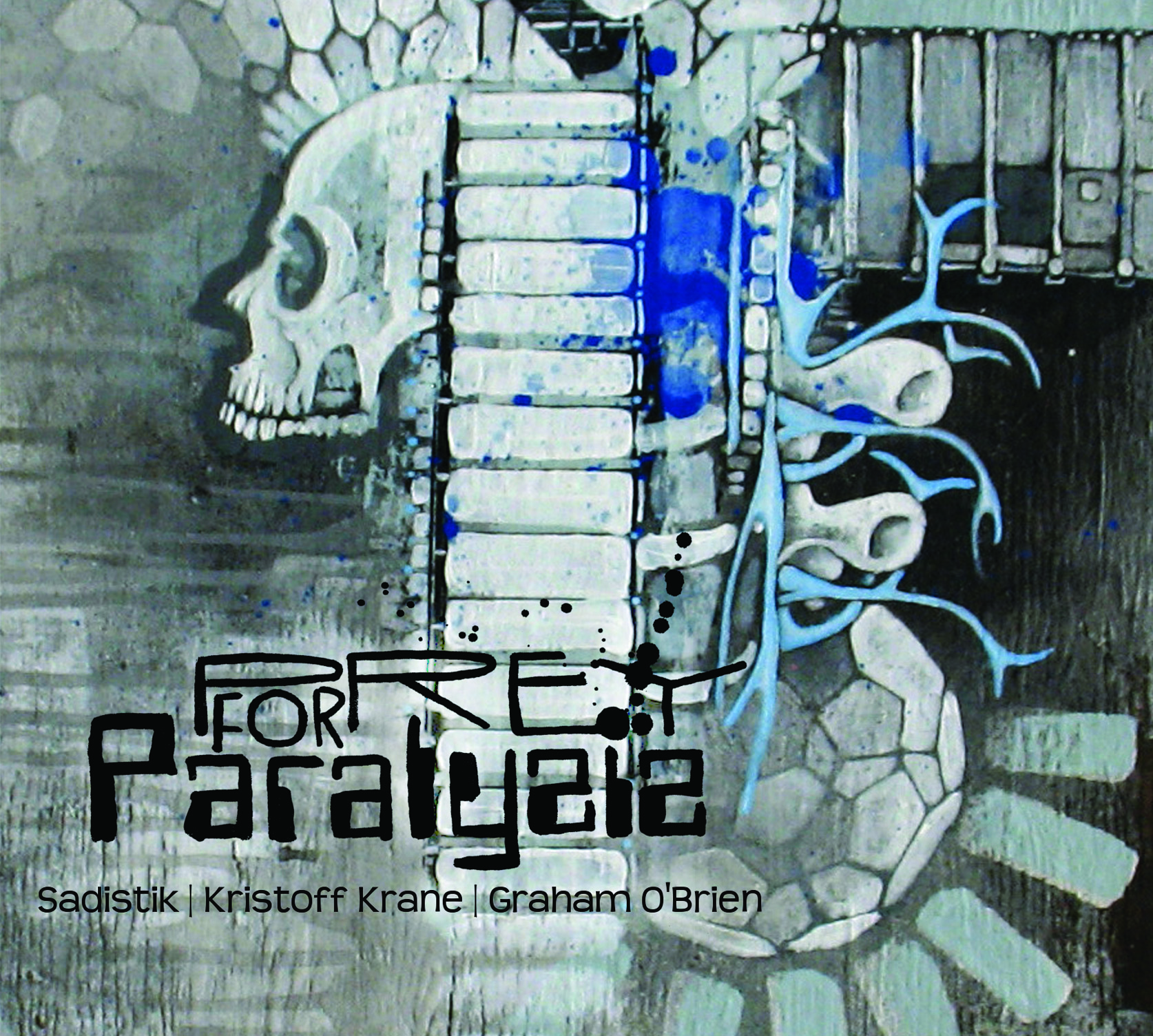
Rewite: Krsitoff Krane and Sadistik, “Prey For Paralysis” (Crushkill Recordings, 2011)


If 1989’s classic Biz Markie is the king of emo-rap, then the Minneapolis underground rap scene is his mulatto, illegitimate, angsty-arty love child from a suburban skinny-jeans-wearing turntablist. Samples of dusty piano chords mixed in with random vocal bits interrupted by distinct and unexpected DJ scratching are what make the Twin Cities rap culture unique. It’s also notably more multilayered than its New York roots; the Twin Cities emcees do not want you to forget that they aren’t a “coast,” but rather the country’s inner muscle—that’s sick, tired, hungover and pissed off.

That being said, Minneapolis native Kristoff Krane and Sadistik’s latest project, “Prey for Paralysis” is characteristically not in any forgiving mood. With their visually depressing lyrics mashed with melancholic and menacing group No Bird Sing member Graham O’Brien’s production techniques, the album is not short of a twisted kick-in-the-gut whirlwind of eerie phenomena. “Prey for Paralysis” is beautifully succinct and emotive, the perfect convergence of methods, attacking the listener’s auditory nerves with a powerful punk thrust, cynical observations, and an out-and-out assault on hip-hop’s standards.

Sadistik and Krane’s styles exhibit a similar background in poetry and prose, as they both execute a desire to make hip-hop that pushes musical boundaries. Krane’s earlier work contains uncommon backtracks, using samples of experimental jazz, rock and hip-hop beats. Though generally known to create relatable music with a positive outlook, curiously, Krane evades any positivity on this collaborative effort. Instead, he matches Sadistik’s darker, apocalyptic flavor. And, with both rappers on the same page, Sadistik and Krane prove to be a great match. Both are able to pull the listener in with their abstract imagery and long form narrative within each of their rhymes. We see this in the track “Higher Brain:” “I’m gonna bite the hand that feeds until I masticate and make it live in me like a symphony that dances in acid rain…It’s like I’m alone inside a little winter getting bitter from the frigid shivers.” They are both tremendously wordy, however, the real tastiness comes from the traditional rapping cadences transitioned with occasional bouts of singing.

An album this dark and depressing walks the thin line of being emotionally redundant, but with only 10 tracks it avoids becoming an overbearing downer. "Pyramid Song" kicks it off and sets the tone for the album as Sadistik and Krane contemplate the meaning of life back and forth, without any glimpse of hope. In "Bad Timing," we see this cynicism carried on. Krane recites:

Without a doubt in my mind, in the blink of an eye
The world as we know it will be combined
All the seas will go dry, all the creatures will die
All the trees will topple over and the humans will hide
Will look up in the sky and repeat the word ‘why?’
And deep down in our hearts we will plead for their lives.

After Sadistik and Krane taunt life’s fated future above jagged guitars and lurid drum rolls for 22 solid minutes, you’re left with a bizarre cloudy feeling similar to exiting an unnerving paranormal haunted house. Blending hip-hop and rock is no easy task, but with producer O'Brien providing bleak industrial music that adds the push-over-the-edge, "Prey for Paralysis" is every bit the perfect tornado of pessimistic energy rock and hip-hop now have in common.


Sunday, February 5, 2012

Krsitoff Krane and Sadistik, “Prey For Paralysis” (Crushkill Recordings, 2011)


In times of rap artists releasing successful Top 40 records with a chorus simply stating the word “ass” repetitively, or expressing that things that are capable of actually being “cray,” Kanye West himself has asked, “do anybody make real shit anymore?” The answer to his question is undoubtedly yes, thanks to Sadistik and Kristoff Krane’s new hip-hop/rap project “Prey For Paralysis.”

The popular underground rap artists Sadistik and Kristoff Krane began a three-month tour in April 2011 that took them to nine different countries and resulted in them collaborating together on their tour bus. While touring in Amsterdam, Krane exposed Sadistik to a fellow Minnesotan: the live instrumentalist and ‘melancholic and menacing’ hip-hop band No Bird Sing member Graham O’Brien, whom they found to be a perfect match to produce their work. Once they collided, “Prey For Paralysis” was born.

Sadistik and Krane’s ways exhibit a similar background in poetry and prose, as they both execute a desire to make hip-hop that pushes musical boundaries. Krane’s earlier work contains uncommon backtracks, using experimental jazz, rock and hip-hop to drive his work. Sadistik’s solo material has a darker element using anything from ambient electronic music to harsh guitars and drums. That being said, Graham O’Brien is an obvious choice to complete the trio: on top of being an excellent producer to this album, O’Brien’s drum skills are phenomenal, piecing together the album and definitely being the album’s push over the edge. Without his additive swag, the album would not sound as frenetically intense as it does. As emcees, Sadistik and Krane are a great match. Both are able to pull the listener in with their abstract imagery and long form narrative within each of their rhymes. They are both tremendously wordy, however, the real tastiness comes from the eerie short sung choruses linking together the verses.

It is clear this pair includes an emcee from the Twin Cities: the place where the underground rap culture is nurtured by local hip-hop label Rhymesayers Entertainment who fosters the prominent artists such as Atmosphere, Eyedea & Abilities, P.O.S. and MF Doom. Because Krane’s most notable work was with the late Eyedea (collaboration duo titled Face Candy), it has been rumored that “Prey For Paralysis” was a sequeled nod to Eyedea’s “By The Throat.” This rumor is plausible, considering the match between the rapid rhyming and the lurid drumming throughout the album; also considering similarities to Eyedea’s famously dark lyrics. In the record “Higher Brain” off this album, Krane recites, “FEMA camps, 9/11, obsession with materialism/…We’re living in a prison so let’s set bail.”

The album’s only fault is that it, at times, continues on too repetitive: with each song containing the focus on the match between samples of distinctive vocal whirrs and blatant drum beats backtracking Krane and Sadistik’s insane rapid rhyming abilities, it’s hard to distinct some songs from the next.

Nevertheless, the album is arguably some of the best work from both Sadistik and Krane. Most notably, “Hunter’s Prey” highlights the true harmonious way the three artists mesh, or perhaps beautifully juxtapose, their unique crafts together. This record contains the most variety out of the ten tracks.

The uneasy feeling that the unrestrained roller coaster “Prey For Paralysis” leaves listeners with is incomparable. The two prominent hip-hop artists matched with O’Brien’s unbeatable producing talent form a force to be reckoned with. Though this album may periodically sound like one ongoing drum-filled paranormal track, it’s definitely an album to rock out t­o — start to finish.


Sunday, January 29, 2012

Critical Condition: Donna Seaman's Approach to Reviewing


Years ago, even the ability to publish a byline in some URL form was enough to constitute an author as credible. Now virtually anyone can create their own website and broadcast their written word across the planet—within seconds. This alone threatens the world of true criticism.

So, who can we trust? What defines a true critic? “One must have the urge to share one’s enthusiasms,” Donna Seaman, a renowned literary critic clarifies, “To advocate. To be clear about what is that matters in a work of art.” Seaman describes her approach to reviewing the arts and its challenges in a chatroom of top Chicagoan critics moderated by Kris Vire for “TimeOut Chicago.”

The most crucial quality to qualify someone as a good critic according to Seaman, however, is passion. “You must find consolation in the art you dedicate yourself to and devote your critical attention out of hunger for what books or music or, literally, food grants you.” There is no basis for critiquing any subject area without any personal fascination for it, as Seaman conveys. Subsequently, Seaman explains that with passion ensues absorption in that subject, which then leads to necessary knowledge and credibility. “…Passion must lead to discipline and immersion. Expertise is gained from sustained attention…ongoing self-education is essential.” In other words, in order to be a suitable critic in a certain field, one must be self-educated—something that should come hand-in-hand with the enthusiasm for that subject.

Seaman herself may have a unique approach to criticism, because contrasting to reviewing food or music, she essentially writes about writing. By reviewing for print, Web and live assessments on the radio, Seaman sees differences in her voice within her writings through each medium. She states that the biggest dissimilarity within print is the role of the editor, with constraints regarding length or form. “When I write strictly for the Web, I do write a bit more informally…[Writing for print is] like writing a sonnet instead of a stream-of-consciousness monologue.”

Though she may, on occasion, find herself somewhat unrestrained, Donna Seaman underlines clarity at all times. “I’m always hoping for clarity. The best criticism is rich in unexpected connections.” For example, when a critic such as Rob Harvilla from Spin.com uses random phrases such as “Valley-girl Desdemona” in attempt to capture Lana Del Rey’s inexplicable façade, the outcome is not short of a truly encapsulating and succinct two-word summarization of an entire persona. Seaman stresses that reviews, no matter good or bad, must still be as concise and clear as any other type of writing. “No, we won’t like everything. But when you slam something, you have to be sharp and precise.” This comes from constant revision of one’s own reviews: “There is no writing, only rewriting.” Simply, the more we hack away at our own ramblings, the more to-the-point they become.

Everyone who is subjected to an art form, such as literature, music, or theatre, experiences something completely different from the next. Seaman explains that a critic must keep enough distance away to be able to visualize the work in its own context: amongst other paintings, plays, albums etc. Raising hairs among the other critics in the chatroom discussion, Seaman also argues that one must review the work similarly in a greater context of multiple opinions—not just their own. “Writing is always about exposing the workings of a mind, even a tween with bad taste.”